Tennessee Williams
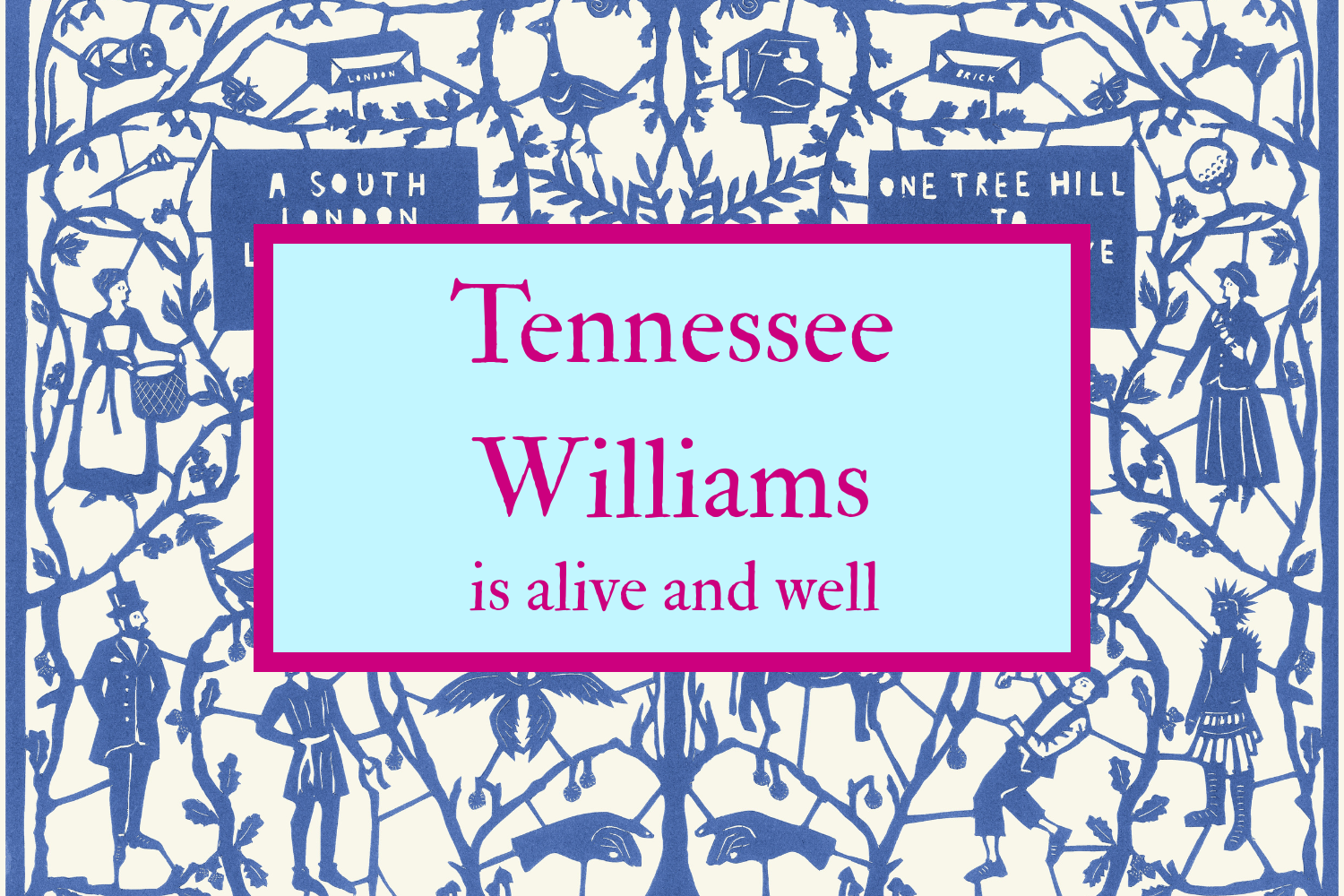
Tennessee Williams is alive and well (and making beautiful art).
There’s something pleasingly inevitable about a person called Tennessee Williams becoming an artist. Somewhere between nominative determinism and theatrical destiny, the script had already been written.
“My parents met working in a theatre. A Streetcar Named Desire was on when I was born, my dad’s surname is Williams — how could they not?”
Our Tennessee Williams in question lives not in New Orleans but South London, where her work has been pollinating the scene in the most unexpected of places: wrapped around beer cans in Deptford, pressed into sold-out bike grips, stitched into zines and increasingly intricate commissions that feel half folk tale, half fever dream. And if you’re especially lucky, you may also find yourself sitting opposite her in Ladywell while she paints tiny worlds onto your fingernails.
Williams works primarily in paper cutting, creating dense, ornate compositions filled with creeping vines, Gothic flourishes, miniature symbols, and hidden jokes. The work pulls from Mexican papel picado, Eastern European cut-paper traditions, medieval illuminations, fairy tales, church carvings, and — crucially — “the bottom of the garden.”
“My mum likes to remind me I used to cut fringes into all my drawings as a child,” she says.
Still, it wasn’t until lockdown that the work properly crystallised. Stuck indoors, she became fixated on the blank side wall of a neighbouring house visible from her window.
“If I pressed cut-outs against the glass, I could project shadows onto it,” she says. “It started with little paper crabs climbing up their guttering, which quickly snowballed.”
Soon the window was full: sprawling paper compositions all shadows and silhouettes and accumulating detail.
“From there, I was hooked.”
Her instinct toward accumulation still defines her work today. A recent cover commission for “One Tree Hill to Peckham Rye Common: A South London Landscape History” became her most ambitious piece yet — an intricate network of branches, symbols and tiny motifs pulled fom the text itself.
“Packed to the rafters,” she exclaims excitedly.
“Every little detail is woven together through branches made from trees native to the common. It was a labour of love.”
The commission came about almost accidentally. After spotting one of South London Landscape’s zines on Instagram, Williams messaged simply hoping to buy a copy.
“He looked at my website and offered me the next cover instead. Kismet.”
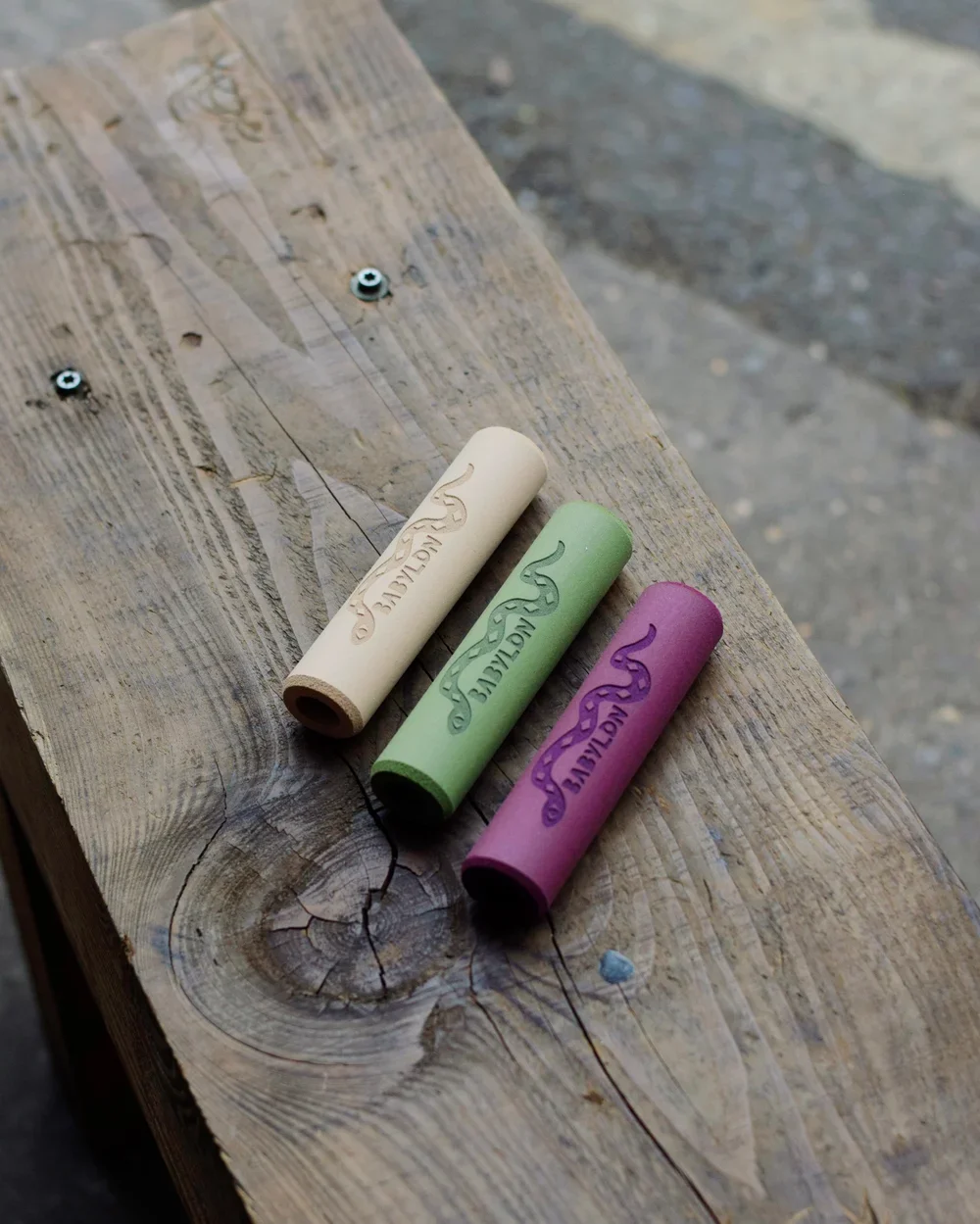
Art escaping the gallery wall and embedding itself into everyday objects is also what explains her attraction to commercial collaborations. A recent project with Villages Brewery saw her illustrate the brewery’s beer cans; another with BABYLDN transformed her work into sold-out custom ike grips.
“I fully believe you can choose wine or beer entirely based on whether the label looks good,” she says.
More importantly, she likes what happens when artwork becomes useful.
“I love seeing my work printed onto real-life objects. There’s something really satisfying about work beginning and ending in a tactile medium.”
Which is partly why nails entered the picture.
“I kept thinking: How do I make art for a wider audience? Not everyone needs album artwork or a beer label. But most people do have nails.”
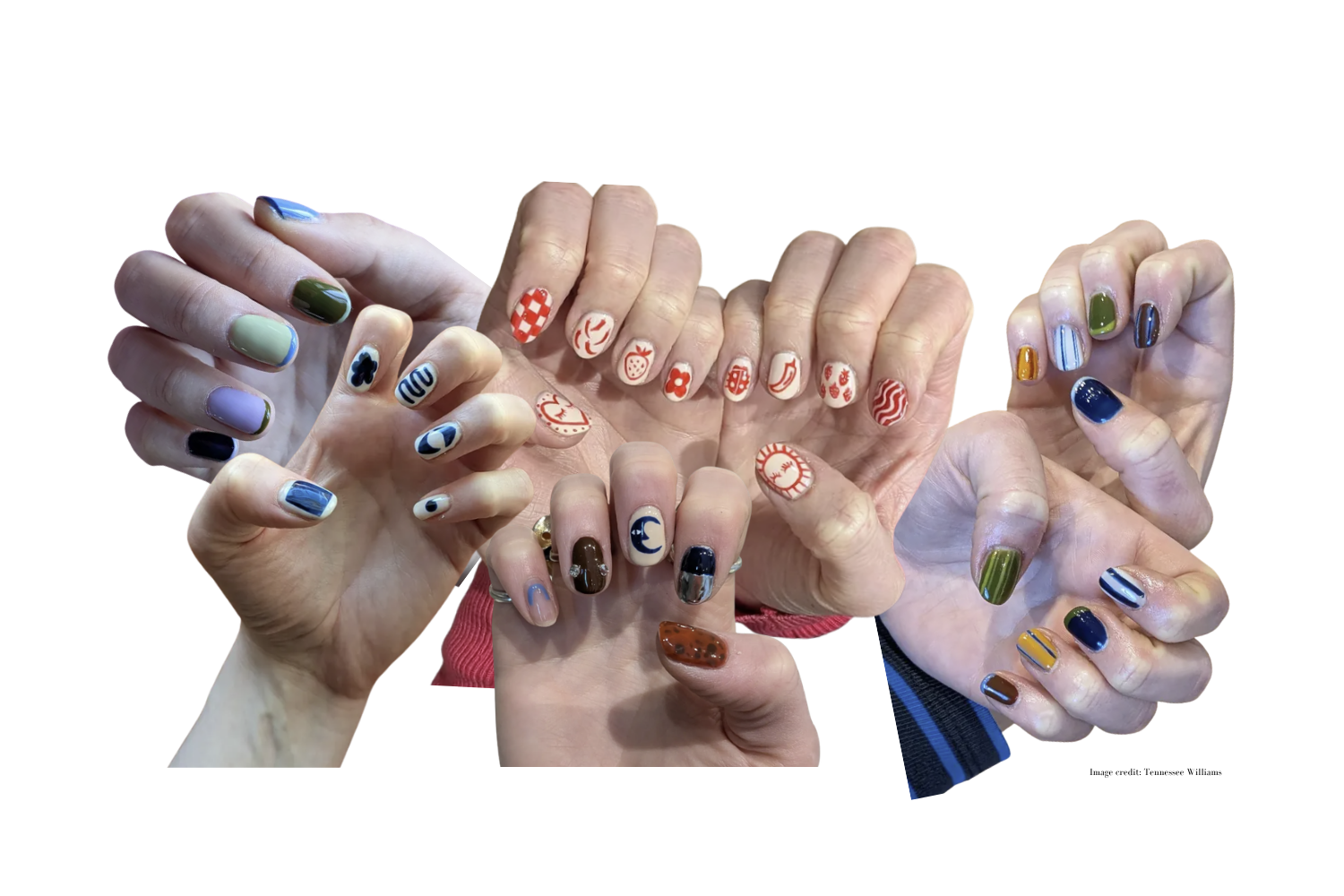
At her studio in Ladywell, Williams now paints intricate miniature scenes onto fingertips. Her tiny hand-rendered compositions delivered somewhere between beauty treatment and confessional booth are booking up fast. The work feels perfectly suited to the format: intimate, slow, impossibly detailed, made while sitting inches away from another person.
“My illustration work already relies on patience and fine motor skills,” she says. “Nail art felt like a pretty logical sidestep.”
Of course there are ancillary benefits too, particularly enjoyable for an artist used to working primarily on her own.
“It’s also just very fun gossiping with regulars.”
Although the only downside, she admits, is orthopedic.
“I fear for my back.”
Ultimately, the body of work of London’s very own Tennessee Williams proposes a resistance to frictionless living, from objects insisting on their own physicality to the unruly chaos of kismet. Naturally, this makes Williams feel entirely at home in the world of personal ads.
When we asked her our signature question, whether she’d ever place one herself, the answer arrived instantly.
“Oh, absolutely.”
Surprise us this did not. Her entire practice already revolves around the same impulse: connection through tangible things. Paper cut by hand. Ink pressed into card. Letters arriving on doormats. Little signals sent out into the world in the hope somebody interesting answers back.
“Physical media feels super important right now,” she says.
“If you’re looking for real-world intimacy, it makes sense to do it through an equally real-world medium.”
And whether somewhere in these pages Tennessee Williams has already placed an ad of her own — well, that remains between her and the classifieds desk.
As it should.
“Besides,” she says, “Who doesn’t love receiving letters?”
Follow Tennessee on Instagram or check out her website here.