The Public Universal Friend
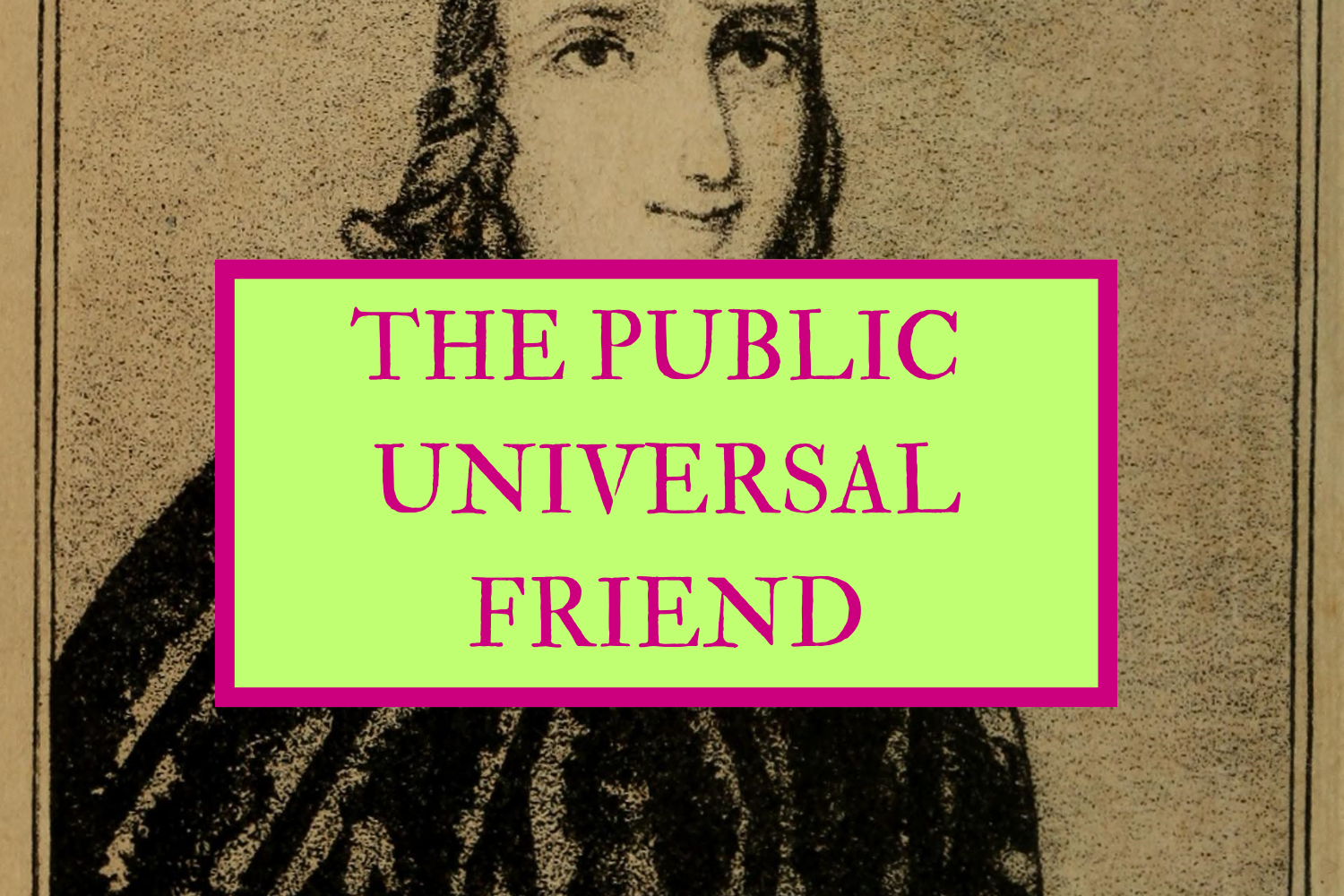
Image: “Portrait of the Public Universal Friend”, from Memoir of Jemima Wilkinson, a preacheress of the eighteenth century; containing an authentic narrative of her life and character, and of the rise, progress and conclusion of her ministry, 1844 by David Hudson.
I may have found the reason for a certain modern disenchantment and, with it, something like a cure.
It is no secret that someone who sets up a newspaper devoted to the analogue may not be particularly fond of the modern world. I say this with restraint, because of course I enjoy the invisible convenience co-op known as WiFi as much as the next person. However, the one thing I simply cannot forgive the internet for is something it has no fault in, apart from shining a light on its existence:
There are fewer unique experiences than we like to think.
Whatever it is that you thought you experienced in your childhood, or adolescence, or at any point in your life, really, chances are extremely high that you are not the only one. I challenge you, actually, because I am willing to bet that there is a social media account out there that has made a video about said experience. The sound of the clock and the refrigerator at your nan's house? Yeah, we all had the same nan. The way you used to follow raindrops along windows to see which one would win the race? The Grand Prix of infancy, it seems. The fact all school children, all over the world, vandalise their rubbers with their pencils producing the same pattern of academic dispair... It seems that the internet brought us closer together not through connection, but by showing us that we are all, at the very basis, very human. Or in other words, we are more alike than we would like to admit.
This is where a certain modern malaise begins. We have been sold individuality as both birthright and obligation: be different, be singular, be unmistakably yourself. It is exhausting, not least because it runs against the evidence. The truth is that the most remarkable thing about us is not our difference, but our sameness. We are, in the least poetic and most profound sense, all just people. There is therefore, nothing that hasn’t come before us, and probably nothing much new, at the core, that will come after us.
Case in point: The Public Universal Friend. The friend, as they were also referred to, started life as Jemima Wilkinson. At the age of twenty-four, after falling severely ill, Jemima died and reanimated as PUF, the genderless evangelist. From that moment they refused their birth name. They declined gender entirely. They dressed in ways we might now call androgynous, though at the time it was simply remarked upon.
And then they got on with it: preaching, gathering followers, travelling across the northeastern United States, speaking on sin, equality, the abolition of slavery, and the business of living a decent life. Their followers, mostly unmarried women, obliged. They used no pronouns, entertained no former name, and spoke of the Friend as neither male nor female, but something else entirely. They did all of this in the late eighteenth century, passing away over two hundred years ago. This was not a fringe performance carried out in obscurity. The Friend drew crowds, founded a religious society and appeared in contemporary accounts of the era’s spiritual movements. None of this is new. Not the identity, not the resistance to it, not even the curiosity it inspires. We have been here before.
Which is worth remembering, because we remain oddly determined to position ourselves at the cutting edge of everything — identity included. The instinct is to divide: to sort, to label, to insist on difference as the primary fact. But difference is only half the story. The other half is that we are all working with the same emotional equipment — more or less — the same small catalogue of hopes, fears, and social misfires.
This brings us to the peculiar contradictory tension in how we live now. We are told to stand out, and shown — constantly — how alike we are. Scroll long enough and you will find both your exact personality and its opposite, each performed with equal conviction. The roles are interchangeable: watcher and watched, envy and its object. Neither position holds for long. Perhaps we should just step back from the performance. To accept that we are not entirely original, and that this is not a failing. The fact that someone, somewhere, has felt what you have felt does not diminish it. It gives it context and places you in a lineage — of bored schoolchildren, lovesick adults, overthinkers, underachievers, and the occasional eighteenth-century self-proclaimed Quaker prophet who decided that gender was beside the point.
So: no unique experiences.
No entirely new ways of being. Just an ongoing repetition of human life in its familiar forms. This need not be cause for despair. It may be the closest thing we have to a solution: We do not need to carve ourselves into ever finer distinctions to justify our place here.
The extraordinary thing — the thing worth holding onto — is that we are here at all, together, sharing variations on the same strange, ordinary life. Just like personal ads have been here before, the revolution might now be televised, yet in essence it will yield the same result: the möbius strip of existence.
This article originally appeared in Issue 04, published in April 2026. It was published online on June 17, 2026.